2026 Pure Aero 100 Review: Is It REALLY Better?
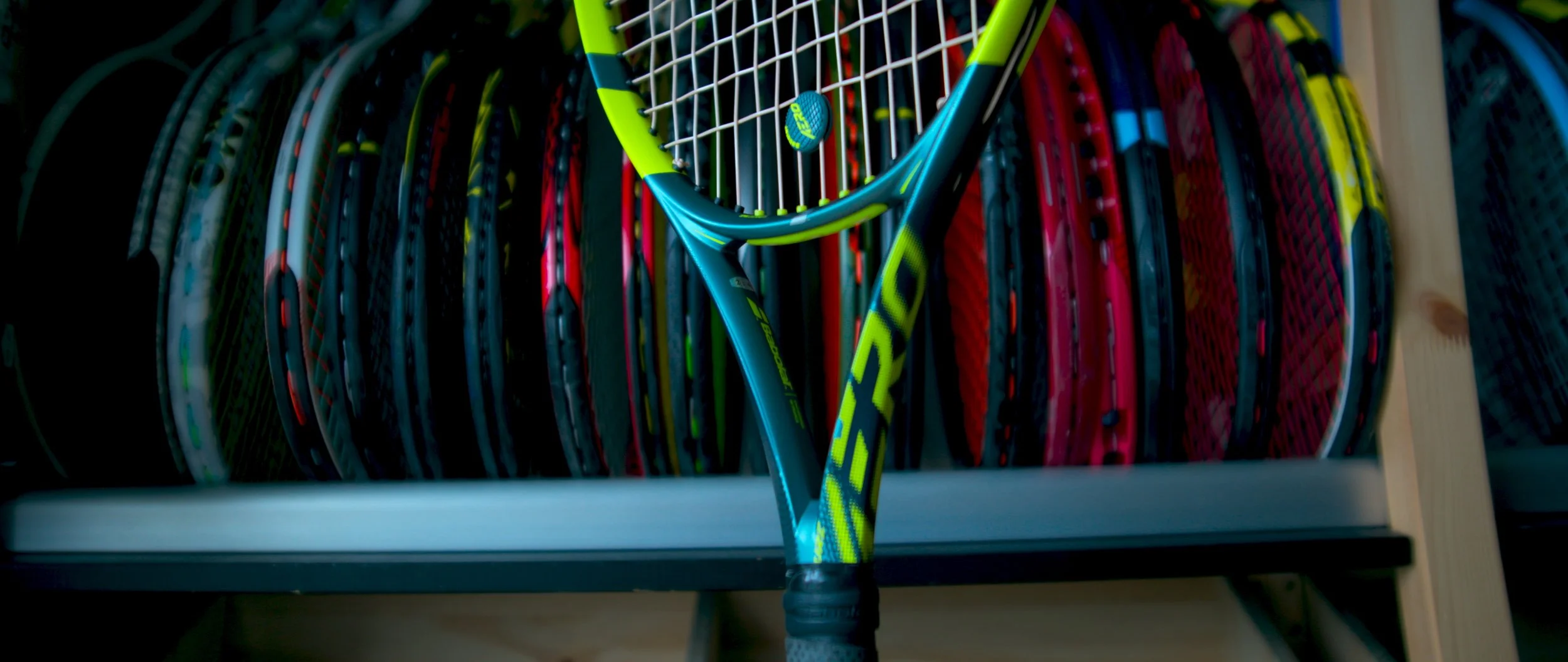
On paper, the 2026 Pure Aero is the exact same racquet as last year, same headsize, weight, balance, string pattern, stiffness and beam thickness. However, racquets are more than just a spec sheet and this 2026 Pure Aero a massive update. The mold is all-new with major changes to the shaft geometry and tweaks the shape of the upper hoop.
Babolat will tell you that these changes yield improved aerodynamics for greater swingspeeds and more spin but honestly, I don’t think you need to worry about a 6% drag reduction for 3% more spin. What you need to worry about is how this new mold changes the identity of the Pure Aero, drastically impacting the racquet’s power, stability and hitting feel.
First Impressions
Usually I don’t share my first impressions of a racquet for the full review but in this case, I must, as this Aero was quite a challenge to figure out. My first hit with the extended length version last Summer had me swooning immediately. The power and spin felt huge and the feel was much improved. Then, I got my retail copies in January and my first impressions mirrored my feelings of the prototype version. As I got to play more with the frame, I started really struggling. The power is huge now and I wasn’t finding the spin and control that I found with my Aero Rafa.
I think these struggles are entirely due to the new mold. There’s a lot more flexing with the new Aero, the stringbed pockets the ball more than ever before and the trampoline effect feels immense. I was seriously missing that classic boardy Aero feel, losing confidence more and more with every stroke. After trying stiffer strings in RPM Blast and Tour M8 and medium tensions, I decided to jack things up to 55lbs with a softer, spin heavy string and suddenly, all was right with the world.
I regained control. I regained confidence. And I regained my appreciation for the racquet.
All of this is is to say that this review is going to take from my experiences with several different string and weight setups that I tried over the last month, highlighting the setups that extract the best performance out of the Pure Aero 100.
Feel
Feel is the biggest change with the new mold. Previous Aero’s were fairly criticized for being a bit boardy and stiff. While I personally like that feel, I can understand the desire for a more comfortable Pure Aero with a plusher feel and more ball-pocketing. So if that’s what you’ve been looking for, the 2026 Pure Aero delivers.
There’s a hint of throat flex now, not quite as much as the EZONE 100 but more than any previous version of Aero. The ball pocketing at medium to low tensions, like 50lbs and under, is absolutely immense. For the first time ever, you can really feel the ball sink into the stringbed and launch out.
The actual impact sensation does seem to be variable, meaning the racquet is a little more boardy at lower swingspeeds but the flex and dwell-time really open up once you lean into your shots. If Head’s Auxetic feels a bit rubbery, Wilson’s SI3D feels a big spongy and Yonex’s Minolon feels pillowy, I’d say the flex on this new Aero feels a bit crunchy.
It’s not brittle or harsh necessarily, but there’s a bubble-wrap type of feel where you can feel the frame compress a little bit but with stages of resistance. I’m not sure if I necessarily like this feel, I certainly do prefer it to the Wilson Ultra 100 and Auxetic feel, but I’ve really come to appreciate the flex profile and hitting feel of the current EZONE 100.
A Full Set With the 2026 Pure Aero
Power
This new flex also increases your sensation of power over the previous version. I always felt that the last Aero 100 was a bit muted and dead feeling, especially in comparison to the Rafa, which really feels crisp and punchy. The hitting sound on the new Aero is definitely louder and crisper than the last one, more in line with the Rafa, which definitely increases your sensation of power.
In terms of actual court penetration, I do think this Aero delivers. With a target swingweight of 290 unstrung, you should be met with plenty of plow through when you’ve got to generate your own pace and enough stability to redirect it.
In terms of raw power, I think we might be a half step behind the VCORE and EZONE, but well in line with the Pure Drive and ahead of both the FX500 and Solinco Blackout.
Stability
Stability was a surprisingly challenging area for me to evaluate. Our racquet came a bit underspec in stock form so I did add 2 grams to beef up a little bit. Initially, I really struggled with service returns. It felt like the racquet was just getting bullied, twisting and shaking in my hand. Thankfully, as I experimented with different setups, I realised that my struggles were mainly driven by technique and confidence.
At 50lbs, RPM Blast remains a bit unforgiving on returns, and M8 and Alpha were too soft and felt unpredictable at the tension. My lack of confidence in the setup meant that I was either overhitting with Blast, or underhitting with Grapplesnake. Once I put O-Snap in the frame at 55lbs, I felt the consistency and predictability of the stringbed increase so I could trust myself and be intentional with my returns, while the softness of the O-Toro main helped me on off-centre shots.
I do think that the EZONE 100, VCORE 100 and Pure Drive feel more inherently stable and resist twisting better than the Aero, as the new feel doesn’t always feel super rock-solid, but the stability is certainly sufficient for the segment.
Spin
As this Aero is the quintessential spin racquet, Babolat’s marketing material focuses on increased spin generation though a more aerodynamic mold, specifically more aerodynamic on vertical cuts. While this does make sense, given the spin production is technique driven, I’m not 100% sure I hit more spin here than I do with my Rafa.
Spin is definitely all there on all shots but best of all, it’s quite easy to modulate. I still think my Rafa is the best racquet for really dipping your wrist and getting under the ball, but the new Aero is right up there with it.
I have heard a lot of concerns about maneuverability with the new Aero. The twistweight on Aero 100’s has been high for a while now, even my 290g Rafa has a twistweight of 14.8, so you might be surprised to know that the twistweight on the 2026 Aero is a medium-low 14.3. For me, this makes brushing up the back of the ball much easier here as opposed to the VCORE 100.
My personal copy does swing quite fast, explained by the weight and balance were on-spec but the sweingweight was a bit low.
I didn’t quite find the right maneuverability to stability ratio in stock form, but adding 2g at 12 and replacing the base grip with a stripped VT Adventec grip made the racquet more head heavy which sync’s perfectly for my game, opening up better spin and better spin modulation for my technique.
Comfort
A quick note on comfort, which I rarely talk about because I do NOT have comfort issues with racquets. I grew up playing with very stiff strings and high tension in very stiff racquets so I’ve really gotten used to pretty damaging setups, but I understand how previous Aero 100’s likely lost sales due to insufficient comfort.
The new mold and layup yield a significantly more comfortable setup than any other Aero. Holding tension and strings constant, the ‘26 Aero is plusher and more comfortable than ever before and I think it’s even more comfortable than the VCORE now, though not quite as comfortable as the EZONE.
That said, if you want to hold “perceived control” constant, I’m not sure that comfort is better. With my Aero Rafa, which for your information, is a completely undampened Aero, I can find all the control I need at 51lbs. With the new Aero, I need to go up to 54 or 55lbs to find the same control.
I think that, with O-Snap, the new Aero at 55lbs is less comfortable than my modified Rafa at 51lbs. As with most things in tennis, comfort is a give and take. I suspect MOST people will prefer the new Aero’s comfort and control to the old one because the ratio sits more inline with the rest of the market.
Match Play
So I’ve been playing a lot more sets for these reviews to help me evaluate the playability of racquets more holistically. Serves are great with this stick. I felt plenty accurate and found all my usual spots with consistency. Returns, as previously mentioned, were a struggle at first, but once I got my spec dialed in I felt amazing.
The area that the new Aero accels in matchplay when compared to my Rafa is in attacking play. My net play is easily the worst part of my game and the Rafa’s worst aspect on court is net play. That said, there’s something about the new Aero that made me a lot more confident in the forecourt. The denser string pattern helps with control on volleys, the improved stability increased my confidence when going forward and the fact that I’m able to use a racquet that’s 10g lighter helps me a lot on reflex volleys.
Since I got my spec dialed in, I think I might genuinely be playing better with the 2026 Pure Aero than my Rafa. I definitely had my moments of doubt, but I feel like the new Aero helps me be a lot more intentional with my game. Instead of trying to rally-ball the crap out of my opponent with looping spin, I can attack and defend with more diligence.
Flattening out attacking shots comes much more easily, closing the new feels more natural and I don’t feel like I’m sacrificing defensive capabilities.
So as you can probably tell, I’m really enjoying the new Aero, but is it a good choice for you?
Recommendations
I’d recommend the new Aero to anyone who liked the previous Aero but needed better comfort or a more connected feel. I’d also recommend it to someone who likes the current EZONE 100 but wants a firmer and more connected feel.
Overall, I think the new Aero is a fantastic update that will split the audience. Some people will love it and some people will hate it and I think a huge part of that story is going to be about finding the right string setup.
For example, I think RPM Blast absolutely sucks in this frame, it kills the feel and doesn’t create that much spin. Essentially, I think the string that most people will probably use in their demo’s sucks all the life out of the racquet.
But if you have the chance to try the frame with something that’s got a little more personality, I think you’ll be set with one of the absolute best 100 square inch racquets on the market.